
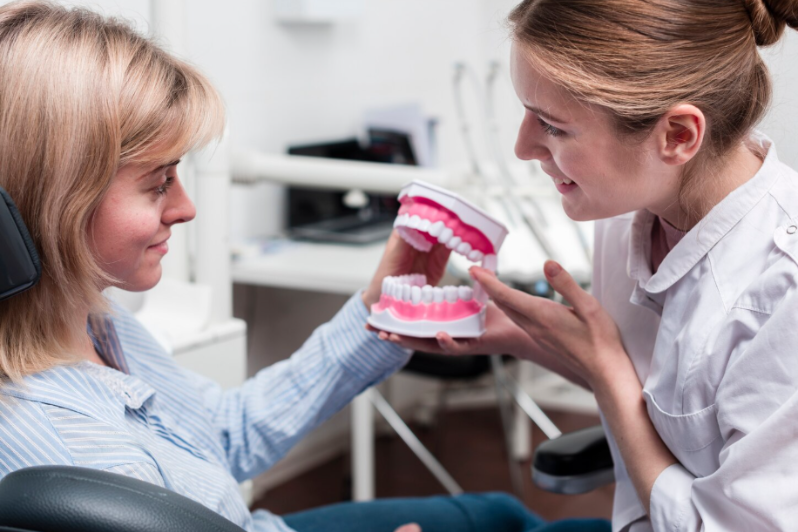
Dentures vs. Dental Implants: Which Is Right for You?
Losing one or more teeth can affect how you eat, speak, and feel about your smile. Missing teeth may also allow neighboring teeth to shift, and bone loss can sometimes occur around an untreated gap. Fortunately, modern dentistry offers several ways to restore missing teeth, including removable dentures and dental implants.
Dentures and dental implants can both restore appearance and function, but they work differently. Dentures are removable appliances that replace several or all missing teeth. Dental implants are surgically placed posts that support crowns, bridges, or implant-retained dentures. Dentures & Partials in Flower Mound, TX
At Ace Smile Dentistry in Flower Mound, Texas, Dr. Prathyusha Mendu evaluates your oral health, remaining teeth, gums, jawbone, medical history, treatment goals, and lifestyle before recommending a tooth-replacement plan. The right choice is not automatically the newest or most expensive option—it is the solution that fits your individual clinical needs.
What Are Dentures?
Dentures are removable dental appliances designed to replace missing teeth and surrounding tissues. They may be used when several teeth are missing or when an entire upper or lower arch needs replacement.
The main types include:
- Complete dentures, which replace all teeth in the upper or lower jaw
- Partial dentures, which replace several missing teeth while using the remaining natural teeth for support
- Immediate dentures, which may be placed on the same day that remaining teeth are removed
- Overdentures, which fit over selected natural teeth or attach to dental implants for additional support
A removable partial denture generally consists of replacement teeth connected to a gum-colored base. Depending on the design, it may use a metal framework, clasps, or precision attachments to connect to natural teeth.
Dentures are customized to fit the shape of your mouth and support your facial appearance. They can restore multiple missing teeth without requiring an implant for every tooth.
What Are Dental Implants?
A dental implant is a post, commonly made from titanium or another biocompatible material, that is surgically placed in the jawbone. The implant acts as an artificial tooth root and provides support for a dental crown, bridge, or denture.
Implant treatment usually involves three broad stages:
- The implant is surgically positioned in the jaw.
- The surrounding bone heals around the implant through a process called osseointegration.
- A customized crown, bridge, or denture is attached after adequate healing.
Osseointegration may take several months, although the exact treatment sequence varies according to bone condition, implant location, surgical approach, and the restoration being planned.
A single implant can support one crown. Multiple implants may support a bridge or help stabilize a removable or fixed full-arch restoration.
Dentures vs. Implants: The Main Differences
The most noticeable difference is that conventional dentures are removable, while an implant crown or implant-supported fixed restoration stays in place.
However, treatment time, comfort, maintenance, jawbone health, surgery, and long-term planning are also important considerations.
1. Stability and Chewing
Dental implants are anchored within the jawbone, so an implant-supported crown or bridge can feel stable during speaking and chewing. The ADA describes implants as secure, stable replacements that function as strong anchors for replacement teeth.
Traditional dentures rest on the gums and may require time for your cheeks and tongue to become accustomed to keeping them in place. New dentures can initially feel loose or awkward, and minor irritation or increased saliva may occur during the adjustment period. Follow-up visits allow the dentist to check the fit and make necessary adjustments.
A properly fitted denture can restore useful function, but patients may need to modify how they bite and chew. An implant-supported denture may offer greater stability than a conventional removable denture.
2. Appearance
Both options can be designed to look natural.
Dentures replace missing teeth and may also support the lips, cheeks, and facial profile. Complete tooth loss can cause the facial muscles to appear sunken, and dentures can help restore support and improve the appearance of the smile.
Implant crowns are customized according to the size, shape, shade, and position of surrounding teeth. Because they emerge from the gum area and do not require visible clasps, they can closely resemble natural teeth when treatment conditions are favorable.
The final appearance depends on the quality of the remaining bone and gum tissue, tooth position, lip movement, restorative materials, and treatment planning—not only the type of replacement selected.
3. Treatment Time
Dentures can often be completed without implant surgery, although the process may still require several appointments for examinations, impressions or scans, bite measurements, try-ins, delivery, and adjustments.
A conventional complete denture is usually made after tooth-removal sites have healed. An immediate denture can be inserted on the day teeth are removed, but it may later need adjustment, relining, or replacement as the gums and jaw change during healing.
Implant treatment generally takes longer because it involves surgery and a healing period. Some patients may receive a temporary restoration during healing, while others must wait before the final crown, bridge, or denture can be attached.
Patients seeking the fastest option should still avoid making a decision based only on treatment time. Long-term function, health, maintenance, and predictability are equally important.
4. Surgery and Recovery
Conventional dentures do not require implant placement. However, tooth extraction or other preparatory treatment may still be needed before the appliance is made.
Dental implants require a surgical procedure. Local anesthesia is used, and additional comfort options may be considered according to the treatment and patient’s needs.
Some temporary tenderness, swelling, or dietary restrictions may occur after implant placement. Adequate healing is essential before the implant receives full chewing pressure.
Patients who prefer to avoid surgery, have certain health concerns, or do not have adequate jawbone may find conventional dentures more suitable. Other patients may be able to receive bone-grafting or related treatment to prepare the site, but additional procedures increase treatment time and complexity.
5. Jawbone Preservation
After a tooth is lost, the surrounding jawbone no longer receives the same stimulation from the tooth root. Bone changes may gradually occur around the missing area.
Because a dental implant replaces the root portion of a tooth and integrates with the jaw, it can help preserve bone around the treated site.
Conventional dentures rest on the gums and do not replace tooth roots. The shape of the gums and jaw can therefore continue to change over time, which may affect denture fit.
This does not mean that every patient should automatically receive implants. Available bone, gum health, medical conditions, surgical risk, treatment goals, and maintenance ability must all be evaluated.
6. Daily Cleaning and Maintenance
Dentures must be removed and cleaned regularly. The ADA recommends rinsing dentures before brushing and using a soft-bristled brush with a nonabrasive cleanser. The gums, tongue, cheeks, and roof of the mouth should also be cleaned. When dentures are not being worn, they should be stored according to the dentist’s instructions so they do not dry out or warp.
Do not use ordinary household cleaners, bleach, boiling water, or abrasive toothpaste unless specifically instructed by your dentist.
Dental implants do not develop cavities, but plaque and bacteria can still collect around them. Inflammation around an implant may progress from soft-tissue irritation to bone loss, potentially threatening the implant. Implant patients therefore need consistent brushing, cleaning between the teeth or beneath the restoration, and regular professional examinations.
Neither dentures nor implants are maintenance-free.
7. Longevity and Future Adjustments
Dentures may require adjustments as the mouth changes. A denture that becomes loose, uncomfortable, cracked, worn, or difficult to use should be examined rather than repeatedly managed with increasing amounts of adhesive. Regular dental visits remain important even when no natural teeth are present.
Dental implants are considered a long-term tooth-replacement option, but the implant, surrounding tissues, and attached restoration still require monitoring. The crown, bridge, attachment, or denture placed on the implants may wear or require repair over time.
Implant complications can include inflammation, infection, bone loss, excessive mechanical stress, or failure to integrate properly with the jawbone.
Long-term success depends on oral hygiene, regular dental care, bite forces, general health, smoking status, and the quality of available bone and gum tissue.
8. Cost and Treatment Planning
The cost of dentures and dental implants varies significantly. Important factors include:
- The number of missing teeth
- Whether extractions are needed
- The type of denture or implant restoration
- The number of implants required
- Bone-grafting needs
- Laboratory materials
- Sedation or surgical requirements
- Dental insurance benefits
- Future maintenance and repair
Conventional dentures often involve fewer surgical stages, while implant treatment may require surgery, healing, and multiple components. However, patients should compare the complete treatment plan rather than only the initial fee.
Ace Smile Dentistry provides transparent treatment planning and can discuss estimated costs, insurance benefits, and available payment options before treatment begins.
Who May Be a Good Candidate for Dentures?
Dentures may be appropriate for patients who:
- Are missing several or all teeth
- Prefer a removable option
- Do not want implant surgery
- Have insufficient bone for implants and do not want grafting
- Need to replace many teeth within a shorter treatment plan
- Have medical or personal factors that make surgery less suitable
- Are willing to clean and maintain a removable appliance
Partial dentures may be considered when healthy natural teeth remain. Complete dentures may be recommended when no restorable teeth remain in an arch.
A thorough examination is necessary because any active infection, gum disease, decay, or damaged remaining teeth must be addressed as part of the overall plan.
Who May Be a Good Candidate for Dental Implants?
Ideal implant candidates generally have good oral and overall health, healthy gum tissues, and adequate bone to support the implant.
Age alone does not determine implant eligibility. The ADA notes that general health can be more important than age when deciding whether implant treatment is appropriate.
The dentist must review factors such as:
- Jawbone quantity and quality
- Gum health
- History of periodontal disease
- Diabetes control
- Smoking or tobacco use
- Oral-hygiene habits
- Teeth grinding
- Medications and medical conditions
- Ability to attend follow-up visits
Chronic health conditions may affect healing, and tobacco use can slow recovery. Previous gum disease, poor plaque control, smoking, and diabetes may also increase the risk of inflammation around implants.
These factors do not always rule out treatment, but they require careful assessment and risk management.
Is There a Middle Option?
The choice is not always limited to conventional dentures or individual implants.
An implant-retained overdenture combines features of both treatments. The restoration remains removable for cleaning but connects to implants for improved support and stability.
Implants may also support a fixed or removable full-arch restoration. The number and position of implants depend on the jawbone, bite, smile design, medical history, and type of final prosthesis.
For patients who struggle with loose conventional dentures but do not need or want an individual implant for each missing tooth, an implant-supported solution may offer a useful alternative.
Dentures and Implant Crowns at Ace Smile Dentistry
Dr. Prathyusha Mendu is a general and cosmetic dentist who earned her Doctorate of Dental Surgery from the University of Oklahoma. Her clinical interests include restorative crowns and bridges, removable dentures, extractions, root canal therapy, and dental implant crowns.
During a tooth-replacement consultation at Ace Smile Dentistry, Dr. Mendu may:
- Examine your remaining teeth and gums
- Review digital X-rays or other imaging
- Evaluate your bite and available space
- Discuss removable and fixed options
- Explain the advantages and limitations of each choice
- Coordinate implant-surgery referral when needed
- Plan and restore implant crowns when appropriate
- Provide a personalized estimate and treatment sequence
The practice emphasizes conservative, patient-centered planning and clear explanations, allowing patients to understand their options before committing to treatment.
Which Option Is Right for You?
Dentures may be the better choice when you want a removable solution, need to replace many teeth, prefer to avoid surgery, or are not currently a suitable implant candidate.
Dental implants may be preferred when you want a stable, fixed tooth replacement, have adequate bone and healthy gums, can undergo surgery, and are prepared for a longer treatment process.
An implant-supported denture may be considered when you want greater stability than a conventional denture but still prefer a removable restoration.
There is no universally superior treatment. The best solution depends on your health, anatomy, number of missing teeth, comfort preferences, budget, maintenance ability, and long-term goals.
Schedule a Tooth-Replacement Consultation in Flower Mound, Texas
Missing teeth do not have to prevent you from eating comfortably or smiling confidently. A personalized dental evaluation can help you understand whether dentures, dental implants, an implant-supported restoration, or another option is most appropriate.
Schedule an appointment with Dr. Prathyusha Mendu at Ace Smile Dentistry, your trusted dentist in Flower Mound, Texas.
Frequently Asked Questions
Are implants always better than dentures?
No. Implants may offer greater stability and bone support, but they require surgery, adequate bone, suitable health, and a longer treatment process. Dentures may be more appropriate for some patients.
Can dentures be supported by implants?
Yes. Implants can support an overdenture or another full-arch restoration, improving stability compared with some conventional dentures.
Can older adults receive dental implants?
Possibly. Overall health, gum condition, bone availability, healing ability, and risk factors are generally more important than age alone.
Do implants require cleaning?
Yes. Plaque can collect around implants and lead to gum inflammation or bone loss. Daily cleaning and regular dental examinations remain essential.
Do dentures need regular dental checkups?
Yes. Your dentist should examine the fit of the denture and the health of your gums and oral tissues. Loose, damaged, or uncomfortable dentures may require adjustment.