
How Clear Aligners Actually Work: A Step-by-Step Guide
Clear aligners have become a popular choice for people who want straighter teeth without fixed metal brackets and wires. Although the trays look simple, successful treatment involves diagnosis, digital planning, controlled tooth movement, consistent daily wear, professional monitoring, and retainers after treatment.
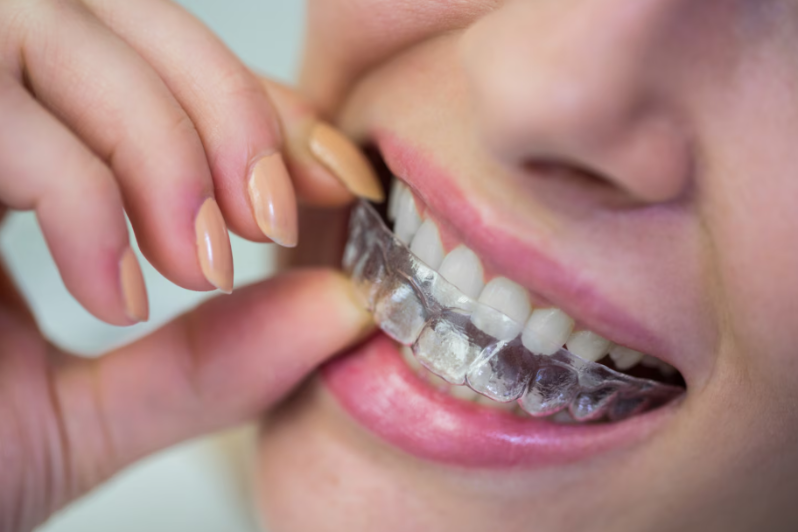
Clear aligners are thin, transparent trays custom-made to fit over the teeth. Each tray applies gentle pressure to selected teeth and moves them a small distance before the patient changes to the next aligner. Proper orthodontic treatment considers more than the appearance of the front teeth; it also evaluates how the upper and lower teeth meet and function together.
At Ace Smile Dentistry in Flower Mound, Texas, Dr. Prathyusha Mendu evaluates each patient’s teeth, gums, bite, dental history, and goals before recommending clear aligners. Here is what the process usually looks like. Clear Aligners in Flower Mound, TX
Step 1: Your Clear Aligner Consultation
Treatment begins with a consultation. Dr. Mendu will ask what you would like to change and whether you have crowding, spacing, rotated teeth, or bite concerns. She may also review previous orthodontic treatment, existing fillings or crowns, teeth grinding, jaw discomfort, oral-hygiene habits, and your preferred timeline.
Clear aligners may treat selected cases involving crowded or crooked teeth, gaps, overbites, underbites, open bites, and crossbites. However, they are not suitable for every patient. Severe rotations, significant jaw differences, or complex bite problems may require braces, additional appliances, or specialist care.
Two smiles can look similar while needing very different treatment plans. A clinical examination is therefore necessary before deciding whether aligners are appropriate.
Step 2: Making Sure Your Mouth Is Healthy
Cavities, active gum disease, infections, and failing restorations may need treatment before the aligner scan. This is important because the trays are manufactured to match the exact shape and position of the teeth. A new filling or crown can change that shape and affect how an existing aligner fits.
Professional dental guidance recommends completing necessary dental work before being scanned because the aligners are created around the exact shape of the teeth. Patients should also continue regular dental examinations and professional cleanings throughout treatment.
Dr. Mendu may recommend a dental cleaning, filling, gum treatment, or other care before your clear-aligner treatment begins.
Step 3: Collecting Digital Records
Once your mouth is ready, the dental team collects records that may include photographs, digital scans, and dental X-rays.
A digital scanner creates a three-dimensional model of your teeth and bite. Photographs document the starting appearance of your smile, while X-rays may be needed to assess tooth roots, supporting bone, tooth position, and structures that cannot be seen during a visual examination.
These records help Dr. Mendu determine which teeth need to move, the amount of available space, the condition of the supporting tissues, and whether clear aligners offer a predictable treatment option.
Step 4: Creating the Digital Treatment Plan
The digital model is used to plan a sequence of small tooth movements. Clear-aligner software shows which teeth should move, the direction of movement, and the order in which those movements should occur.
Planning also considers:
- Root position
- Space within the dental arch
- Upper and lower bite relationships
- The amount of movement that is realistic
- Teeth that may require attachments
- Areas that may need additional techniques
The digital preview can help you understand the proposed direction of treatment, but it is a simulation rather than an absolute guarantee. Teeth respond biologically, so professional monitoring and treatment adjustments may still be required.
Step 5: Manufacturing the Aligner Series
After the treatment plan is approved, a series of custom trays is produced. Each aligner represents a slightly different stage of tooth position.
Patients commonly wear each set for approximately one to two weeks before changing to the next aligner, although the exact schedule varies. The American Association of Orthodontists notes that clear aligners are generally worn sequentially and that each tray moves teeth by a small amount.
Follow the schedule provided by Dr. Mendu. Changing trays too early may not allow the planned movement to finish. Wearing a poorly fitting tray longer does not automatically correct the issue or replace a professional evaluation.
Step 6: Adding Attachments When Needed
Some patients need small, tooth-coloured attachments bonded to selected teeth. These shapes give the trays additional grip and help apply pressure in a more controlled direction.
Attachments may assist with movements such as rotating a tooth or moving it vertically. They are planned according to the individual case and are generally removed when treatment is complete.
In selected cases, the dentist may recommend interproximal reduction, commonly called IPR. This involves removing a carefully planned, small amount of enamel between certain teeth to create the space required for alignment. IPR is not necessary for every patient and should only be performed when clinically appropriate.
Some bite corrections may also require elastics used with the aligners. Dr. Mendu will explain whether attachments, IPR, or elastics are included in your treatment plan.
Step 7: Wearing Your Aligners Consistently
Clear aligners only work while they are in contact with the teeth. Most treatment plans require approximately 20 to 22 hours of daily wear, or the schedule prescribed by the treating dental professional.
The trays are generally removed for:
- Eating
- Drinking anything other than plain water
- Brushing and flossing
- Cleaning the aligners
Aligners should be returned to your mouth promptly after meals and oral hygiene. Leaving them out for long periods may delay treatment and cause the next tray to fit poorly.
A new set may feel tight or create mild pressure for the first few days. A brief adjustment period and temporary discomfort can occur when beginning clear-aligner treatment. Severe pain, a damaged tray, or an aligner that does not seat properly should be reported to the dental office.
Step 8: How Aligners Move Your Teeth
Teeth are supported by tissues that respond to controlled pressure. When an aligner applies gentle force, biological changes occur within the bone and supporting tissues, allowing the tooth to move gradually toward its planned position.
Because tooth movement is a complex biological process, it must happen gradually and under professional supervision. Using stronger force, skipping trays, or changing aligners faster does not necessarily produce quicker or safer results.
The American Dental Association states that removable aligners should be used under the direct supervision of a dentist or orthodontist. Clear aligners should not be treated like a simple mail-order cosmetic product.
Step 9: Attending Progress Appointments
Dr. Mendu will schedule progress checks according to your case and the aligner system being used.
During these appointments, the dental team may evaluate:
- Whether the aligners fit completely
- Whether your teeth are tracking as planned
- The condition of your attachments
- Changes in your bite
- Gum health and oral hygiene
- Lost, cracked, or damaged trays
- Whether the treatment plan needs adjustment
Contact Ace Smile Dentistry before your next scheduled appointment if an aligner breaks, becomes lost, stops fitting, or causes unusual discomfort. Do not guess whether you should move forward to the next set or return to a previous tray.
Step 10: Refinement Aligners
The first series of trays does not always complete every planned movement. A tooth may respond differently than anticipated, or a minor correction may still be needed to improve alignment or the bite.
In this situation, Dr. Mendu may take another digital scan and order refinement aligners. These additional trays are used to fine-tune the result.
Needing refinements does not automatically mean treatment has failed. Teeth do not always move exactly as a digital simulation predicts. Consistent wear and regular progress appointments can help reduce preventable delays.
Step 11: Completing Treatment With Retainers
Once the teeth and bite have reached an acceptable result, the attachments are removed and the teeth may be polished. Active aligner treatment is then followed by retention.
Teeth can shift after orthodontic movement. Retainers help preserve and stabilise the corrected tooth positions after treatment.
A clear retainer may look similar to an aligner, but its role is different:
- Aligners move the teeth.
- Retainers maintain the result.
Wear your retainers according to Dr. Mendu’s instructions. Inconsistent use may allow your teeth to shift and could create a need for additional treatment.
How to Care for Your Teeth and Aligners
Because aligners cover the teeth for most of the day, good oral hygiene is especially important. Food debris, plaque, and sugary liquids trapped under a tray may contribute to staining, decay, bad breath, or gum irritation.
To protect your smile:
- Brush before reinserting the trays whenever possible.
- Clean between your teeth every day.
- Rinse and clean the aligners as directed.
- Store aligners in their case when not in use.
- Keep the trays away from heat, which may distort them.
- Do not wrap aligners in tissues or napkins.
- Keep the trays away from pets.
- Avoid coloured or sugary drinks while wearing them.
Professional guidance recommends removing aligners for eating and drinking, avoiding beverages other than water while wearing them, and brushing before placing them back over the teeth.
Continue routine professional cleanings and examinations throughout treatment. Clear aligners do not protect teeth from cavities or gums from inflammation.
How Long Does Clear Aligner Treatment Take?
There is no standard timeline for every patient. Treatment length depends on:
- The starting position of the teeth
- The complexity of the bite
- The number and type of movements required
- How consistently the aligners are worn
- Whether refinement trays are needed
- How the teeth respond to treatment
Minor alignment may take less time than treatment involving multiple rotations, significant crowding, spacing, or bite correction. Inconsistent daily wear can extend the treatment timeline.
A reliable estimate can only be provided after a clinical examination, diagnostic records, and digital treatment planning.
Clear Aligners vs. Traditional Braces
Clear aligners are discreet, removable for meals, and allow patients to brush and floss without working around fixed brackets and wires.
However, removable treatment requires discipline. Patients who regularly forget to wear their trays may progress more reliably with fixed braces. Some complex orthodontic movements may also be treated more predictably with traditional braces or specialist care.
The best appliance is the one that can safely address your specific teeth and bite—not simply the option that looks least noticeable.
Clear Aligners at Ace Smile Dentistry in Flower Mound
Ace Smile Dentistry offers custom clear-aligner treatment without fixed metal wires or brackets. The practice also provides dental examinations, professional cleanings, digital X-rays, restorative dentistry, cosmetic dental care, and other services that may be coordinated before or during treatment.
Dr. Prathyusha Mendu is a general and cosmetic dentist based in Flower Mound. She earned her Doctorate of Dental Surgery from the University of Oklahoma and continues advanced education in restorative, cosmetic, and digital dentistry. Her approach focuses on conservative planning, patient comfort, and clear explanations.
During your consultation, Dr. Mendu will evaluate whether clear aligners are appropriate, explain what the process involves, and discuss alternatives or specialist referral when another treatment approach may be more suitable.
Schedule a Clear Aligner Consultation in Flower Mound, Texas
Clear aligners work through a planned sequence of small, controlled tooth movements. Successful treatment requires accurate diagnosis, custom trays, consistent daily wear, professional monitoring, possible refinements, and long-term retainer use.
Schedule a consultation with Dr. Prathyusha Mendu at Ace Smile Dentistry, your trusted dentist in Flower Mound, Texas. The team can evaluate your smile and bite and create a personalised plan based on your oral-health needs.
Frequently Asked Questions
Do clear aligners hurt?
Mild pressure or temporary discomfort may occur after beginning treatment or changing to a new tray. Severe or persistent pain should be evaluated by the dental team.
How many hours should aligners be worn?
Many plans require approximately 20 to 22 hours of daily wear. Follow the exact schedule provided by Dr. Mendu.
Can I eat while wearing clear aligners?
Aligners are generally removed before eating. Plain water is usually acceptable while wearing them, but follow your dentist’s specific instructions.
What happens if I lose an aligner?
Contact Ace Smile Dentistry rather than deciding on your own which tray to wear. Depending on your treatment stage, Dr. Mendu may advise using a previous tray, progressing to the next one, or obtaining a replacement.
Will I need attachments?
Not every patient needs attachments. They may be added when an aligner requires additional grip to produce a particular tooth movement.
Do I need retainers after clear-aligner treatment?
Yes. Retainers help maintain the new tooth positions after active treatment. Without proper retention, teeth may gradually shift.