
In-Office vs. At-Home Teeth Whitening: Which Gets Better Results?
Choosing the right teeth-whitening option can be confusing. Should you schedule professional whitening at a dental office, use custom trays at home, or purchase whitening strips from a store? Teeth Whitening in Flower Mound, TX
The answer depends on what you mean by “better results.” In-office whitening generally provides the fastest, most noticeable improvement in a single appointment. Dentist-supervised at-home whitening can also produce excellent results, but the change develops gradually over several days or weeks. Over-the-counter products may help with mild staining, although their strength, fit, and results can vary.
At Ace Smile Dentistry in Flower Mound, Texas, Dr. Prathyusha Mendu evaluates your teeth, gums, sensitivity, existing dental work, and smile goals before recommending a whitening option. This personalized approach helps protect your oral health while setting realistic expectations.
Why Do Teeth Become Discolored?
Tooth color naturally varies and may change with age. The outer enamel can collect surface stains, while the dentin beneath it may gradually become darker.
Common causes include coffee, tea, red wine, cola, tobacco, aging, certain medications, dental trauma, and changes inside a tooth after nerve damage. The type of stain matters because not every discoloration responds equally to bleaching. Yellow or food-related staining often responds more predictably than gray, brown, banded, or deeply internal staining.
A single dark tooth may need a different treatment from full-smile whitening. That is why a dental examination should come before starting any whitening program.
What Is In-Office Teeth Whitening?
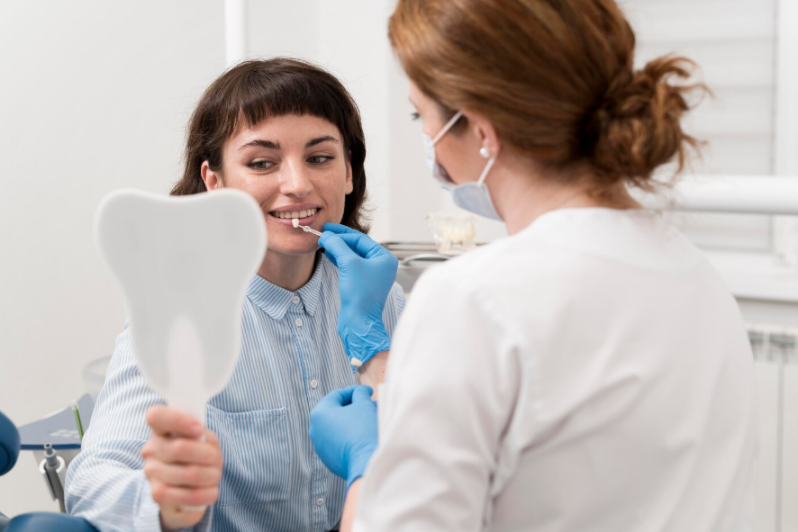
In-office whitening is performed by a dental professional. A peroxide-based whitening gel is applied to the natural teeth while the gums and nearby soft tissues are protected. Depending on the system used, the gel may be applied in several cycles and may be used with or without a specialized light.
Professional in-office products generally contain higher concentrations of whitening ingredients than consumer products, allowing a visible shade change in less time. The American Dental Association identifies in-office bleaching as one of the main professional whitening approaches available.
Benefits of In-Office Whitening
The main advantage is speed. Many patients notice a brighter smile after one appointment, making this option useful before a wedding, graduation, interview, reunion, or other important event.
Limitations of In-Office Whitening
In-office treatment may cause temporary tooth sensitivity or gum irritation. These are among the most common side effects of whitening and usually improve after treatment stops.
The final result varies according to the original tooth shade and cause of discoloration. Whitening cannot guarantee a specific shade, and deeply stained teeth may require additional treatment. In-office whitening may also have a higher initial cost than store-bought products, although it includes professional assessment and supervised application.
What Is At-Home Teeth Whitening?
“At-home whitening” may refer to two categories:
- Dentist-supervised whitening using custom trays and professional gel
- Over-the-counter products such as strips, generic trays, gels, toothpastes, pens, and rinses
These options are not the same. Dentist-supervised home whitening is planned after an examination and uses instructions based on your needs. Over-the-counter products are designed for general consumer use and do not offer the same customization.
Dentist-Supervised At-Home Whitening
For professional take-home whitening, custom trays are designed to fit closely over your teeth. Dr. Mendu provides the whitening gel and explains how much to use, how long to wear the trays, and how many days to continue.
The ADA describes custom-fitted trays as a professional at-home option. A close fit helps hold the gel against the teeth while reducing unnecessary contact with the gums.
The main disadvantage is that results take longer. Patients must use the trays consistently and follow instructions carefully. Using extra gel or wearing the trays longer than recommended may increase sensitivity or gum irritation without improving the outcome.
How Are Store-Bought Products Different?
Whitening strips and gels can improve some mild stains when used correctly. Whitening toothpastes mainly remove external surface stains rather than significantly changing the deeper natural color of teeth.
Over-the-counter bleaching products usually contain lower concentrations of whitening ingredients than professional systems. This often means that visible improvement takes longer. Results may also appear less even when strips or generic trays do not cover every tooth consistently.
When selecting a consumer whitening product, look for the ADA Seal of Acceptance where available and discuss your choice with your dentist. The seal indicates that the product has met the program’s requirements for safety and effectiveness when used as directed.
Avoid social-media remedies involving acidic fruits, vinegar, harsh baking-soda mixtures, or abrasive charcoal. The ADA reports insufficient evidence for several do-it-yourself methods and notes that abrasive or acidic approaches may harm enamel.
Which Whitening Method Gets Better Results?
For the fastest visible improvement, in-office whitening usually performs best. It uses professionally applied materials and can brighten the smile during a single visit.
For gradual improvement and flexibility, dentist-supervised home whitening can produce excellent results. With consistent use, many suitable patients can achieve a substantial shade change, but it generally takes longer than an office procedure.
For mild staining and a lower initial cost, an over-the-counter product may help, but the outcome is usually slower and less personalized.
The best treatment depends on how quickly you want results, your starting shade, the cause of staining, your sensitivity history, your ability to follow a daily routine, visible restorations, budget, and overall oral health.
Some patients may benefit from an in-office session followed by dentist-approved take-home maintenance. Dr. Mendu can determine whether a combined approach is appropriate.
Why a Dental Examination Should Come First
Whitening should never be used to cover an untreated dental problem. A dark area may be a stain, but it could also indicate decay, trauma, a damaged filling, or changes inside the tooth. Whitening gel may also aggravate sensitivity when cavities, exposed roots, cracks, or gum recession are present.
Before recommending whitening, Dr. Prathyusha Mendu may evaluate your teeth for cavities, gum inflammation, sensitivity, cracks, leaking restorations, exposed roots, and internal discoloration. She will also review visible crowns, veneers, fillings, and bonding.
Ace Smile Dentistry offers professional whitening as part of its cosmetic dental services in Flower Mound, with treatment planned around the condition of the patient’s teeth and overall oral health.
Will Crowns, Fillings, or Veneers Whiten?
Whitening products work on natural tooth structure. They do not normally lighten crowns, bridges, veneers, tooth-colored fillings, or bonding.
This matters when restorations are visible in your smile. Whitening the surrounding natural teeth may create a color mismatch. In some cases, patients whiten first and later discuss replacing an older restoration so that it matches the new shade.
Dr. Mendu can help plan the correct treatment order and explain whether whitening alone is likely to meet your goals.
Does Whitening Cause Tooth Sensitivity?
Temporary sensitivity can occur with both in-office and at-home whitening. Some patients notice short, sharp sensations when drinking cold water or breathing cool air. Gum irritation may occur when whitening gel touches the soft tissues.
Sensitivity may be more likely with stronger products, long exposure, frequent applications, gum recession, enamel wear, or a previous history of sensitive teeth. Your dentist may recommend adjusting the schedule, using a different concentration, shortening wear time, or using products designed for sensitive teeth.
Do not continue whitening through severe or persistent discomfort without contacting your dentist.
How Long Do Whitening Results Last?
Whitening is not permanent. The duration depends on oral hygiene, diet, tobacco use, and how often the teeth are exposed to staining foods and drinks.
To maintain a brighter smile:
- Brush twice daily with fluoride toothpaste.
- Clean between your teeth every day.
- Attend regular dental cleanings.
- Rinse with water after coffee, tea, or red wine.
- Avoid smoking and tobacco.
- Follow Dr. Mendu’s instructions for touch-ups.
- Do not overuse whitening products.
More whitening is not always better. Excessive or incorrect use may increase sensitivity and gum irritation.
Who May Not Be a Good Candidate?
Whitening may need to be postponed or modified for people with untreated cavities, active gum disease, severe sensitivity, extensive visible restorations, enamel defects, or stains unlikely to respond to external bleaching.
Children and younger teenagers are not automatically candidates for cosmetic full-mouth whitening. The dentist must consider dental development, oral health, and the cause of discoloration.
Teeth Whitening at Ace Smile Dentistry in Flower Mound
At Ace Smile Dentistry, teeth whitening is approached as part of your overall dental health—not as a one-size-fits-all cosmetic treatment.
Dr. Prathyusha Mendu is a general and cosmetic dentist serving Flower Mound. The practice offers professional teeth whitening and other cosmetic treatments intended to improve tooth color, shape, alignment, and smile balance.
Choosing dentist-supervised whitening provides the benefit of an oral-health evaluation, professional application or custom trays, realistic shade planning, personalized instructions, and follow-up support.
Schedule a Teeth Whitening Consultation in Flower Mound, Texas
So, which method gets better results? In-office whitening typically provides the quickest and most noticeable immediate improvement. Dentist-supervised at-home whitening offers gradual, customizable results and can be highly effective when used consistently. Over-the-counter products may improve mild stains but are generally slower and less personalized.
The right option begins with understanding why your teeth are discolored and whether they are healthy enough for whitening.
Schedule a consultation with Dr. Prathyusha Mendu at Ace Smile Dentistry, your trusted dentist in Flower Mound, Texas. The team can evaluate your smile, explain the available whitening options, and recommend a safe and realistic path toward a brighter appearance.
Frequently Asked Questions
Is in-office whitening stronger than at-home whitening?
In-office whitening generally uses higher-concentration products under professional supervision, so it can produce visible improvement more quickly. Dentist-supervised home trays use a more gradual schedule.
Can professional at-home whitening achieve similar results?
It can produce substantial whitening in suitable patients when used consistently. The main difference is that the result usually develops over a longer period.
Should I Have My Teeth Cleaned Before Whitening?
A dental examination should come first. A professional cleaning may be recommended when plaque, tartar, or surface staining is present.
How White Will My Teeth Become?
Results depend on your natural shade and the cause of discoloration. Whitening cannot guarantee an exact shade, and certain internal stains respond less predictably.