
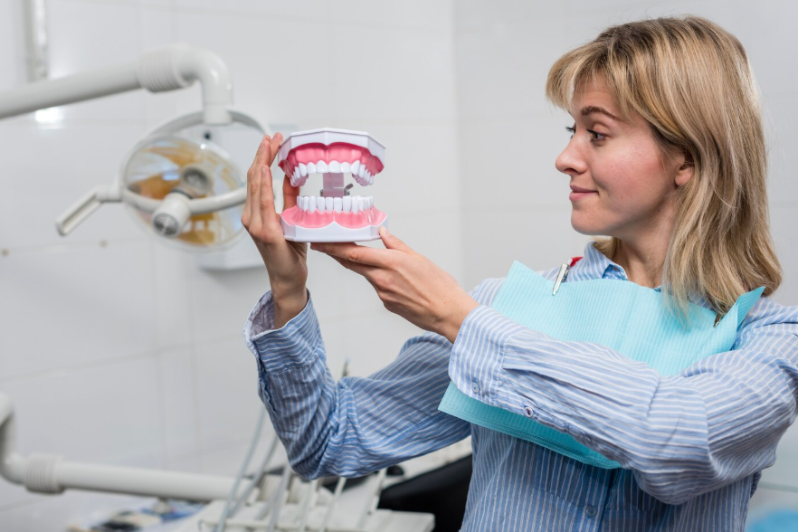
Partial Dentures Explained: Comfort, Care, and Cost
Losing several teeth can affect much more than the appearance of your smile. Missing teeth may make it harder to chew certain foods, pronounce words clearly, or feel confident when speaking and smiling. Depending on the location of the gaps, the remaining teeth may also experience changes in position or biting pressure.
When some healthy natural teeth remain, a partial denture may offer a practical way to restore the missing areas. Unlike a complete denture, which replaces an entire upper or lower arch, a partial denture replaces one or more missing teeth while working alongside the teeth you still have. Dentures & Partials in Flower Mound, TX
At Ace Smile Dentistry in Flower Mound, Texas, Dr. Prathyusha Mendu evaluates your remaining teeth, gums, bite, jawbone, appearance goals, and budget before recommending a tooth-replacement option. The practice provides customized partial dentures designed to improve function, comfort, and the natural appearance of your smile.
What Is a Partial Denture?
A partial denture is a removable dental appliance that fills spaces created by one or more missing teeth. It normally includes artificial replacement teeth attached to a gum-colored base. Depending on its design, it may use clasps, a metal framework, flexible components, or precision attachments to gain support from the remaining teeth.
The artificial teeth are selected and arranged to complement your natural tooth shade, facial features, bite, and available space. The appliance can be removed for cleaning and while sleeping, according to your dentist’s instructions.
A partial denture is different from a dental bridge. Although a bridge is sometimes described as a fixed partial denture, it is cemented or attached to teeth or implants and can only be removed by a dental professional. A removable partial denture can be taken out by the patient for daily cleaning.
Why Replace Missing Teeth?
Some people postpone treatment when the missing teeth are not visible. However, back teeth are important for chewing, bite balance, and supporting everyday oral function.
A partial denture may help:
- Restore some chewing ability
- Improve speech affected by tooth loss
- Fill visible gaps in the smile
- Support the lips and cheeks
- Distribute biting pressure across more teeth
- Reduce food trapping in open spaces
- Help maintain the position of remaining teeth
Results depend on how many teeth are missing, the condition of the supporting teeth and gums, and the design of the appliance. Ace Smile Dentistry describes partial dentures as part of a broader restorative plan intended to support speech, chewing, facial appearance, and the alignment of remaining teeth.
Types of Partial Dentures
There is no single partial-denture design that works for every patient. Dr. Mendu will consider the location of your missing teeth, the health of the remaining teeth, your bite, appearance preferences, and financial priorities.
Acrylic Partial Dentures
An acrylic partial denture commonly uses a gum-colored acrylic base with replacement teeth and clasps. It may be used as a transitional appliance after extractions or as a more economical removable option in selected cases.
Acrylic designs may feel bulkier than some metal-framework options. They may also be more prone to wear or fracture, depending on their construction and how they are used.
Cast-Metal Partial Dentures
A cast-metal partial denture uses a thin metal framework for strength and support. The replacement teeth and gum-colored material are attached to the framework.
Because the framework can be relatively thin, some patients find this design less bulky. However, suitability depends on the available supporting teeth, bite forces, appearance needs, and appliance design.
Flexible Partial Dentures
Flexible partial dentures use a bendable, gum-colored material. They may provide improved appearance in selected cases because the clasps can blend more closely with the gums.
However, flexible dentures are not ideal for every bite or pattern of tooth loss. They may also differ from acrylic or metal designs in how easily they can be adjusted, relined, or repaired.
Partial Dentures With Precision Attachments
Some partial dentures use precision attachments rather than visible clasps. These attachments may provide a more discreet appearance, but crowns on the supporting teeth are sometimes required. The American Dental Association notes that precision-attachment partial dentures generally cost more than clasp-supported designs.
The most expensive design is not automatically the best one. The correct partial denture should provide appropriate support, retention, comfort, cleanliness, and appearance for your individual mouth.
Who May Be a Candidate for Partial Dentures?
Partial dentures may be considered when:
- You are missing several teeth
- Some healthy natural teeth remain
- You want a removable replacement
- A fixed bridge is not appropriate
- You prefer to avoid implant surgery
- There is insufficient bone for implants and you do not want grafting
- You need an interim restoration while another treatment is planned
- You are looking for a potentially more affordable alternative to multiple implants
The remaining teeth and gums must be carefully examined. Teeth affected by severe decay, infection, advanced gum disease, or inadequate bone support may not provide reliable support for a partial denture.
Before creating the appliance, Dr. Prathyusha Mendu may recommend dental cleaning, fillings, crowns, gum treatment, extraction of non-restorable teeth, or other restorative care. Ace Smile Dentistry emphasizes preserving natural teeth when possible and coordinating partial dentures with the patient’s wider restorative treatment plan.
The Partial-Denture Process
The exact process depends on the design and whether preliminary dental treatment is needed.
1. Dental Examination
Dr. Mendu examines your remaining teeth, gums, bite, missing-tooth spaces, existing restorations, and oral tissues. Digital X-rays may be recommended when they are needed to evaluate roots, bone support, decay, infection, or potential supporting teeth.
2. Treatment Planning
The team discusses whether a removable partial denture, dental bridge, implant-supported restoration, or another option is most appropriate. You can review the advantages, limitations, expected maintenance, treatment time, and estimated cost of each choice.
3. Preliminary Dental Care
Cavities, gum inflammation, infection, damaged teeth, or failing restorations may need attention before the final appliance is made. In some cases, crowns may be recommended to improve the support or fit of the partial denture.
4. Impressions or Digital Scans
Measurements, impressions, or digital scans are used to record the shape and position of your teeth and gums. Dental laboratories use the dentist’s prescription and these records to create customized dental prostheses.
5. Bite and Appearance Records
The dentist may record how your upper and lower teeth meet and select a tooth shade that coordinates with your natural smile.
6. Try-In and Fitting
Depending on the design, you may have a try-in appointment before the partial denture is completed. After delivery, the fit, bite, retention, speech, and appearance are checked.
7. Follow-Up Adjustments
Small pressure areas may develop as you begin wearing the appliance. Follow-up visits allow Dr. Mendu to make careful adjustments and improve comfort. Ace Smile Dentistry notes that adjustment appointments may be needed after patients begin wearing new dentures.
Are Partial Dentures Comfortable?
A properly designed partial denture should feel secure enough for normal use, but it may not feel completely natural on the first day.
During the adjustment period, you may notice:
- A feeling of fullness in the mouth
- Mild pressure on the gums or supporting teeth
- Increased saliva
- Temporary changes in speech
- Difficulty chewing certain foods
- Awareness of the clasps or framework
- Mild soreness in specific areas
Your tongue, cheeks, and muscles need time to adapt to the appliance. Begin with soft foods cut into small pieces, chew slowly, and try to distribute food on both sides of your mouth.
Reading aloud can help you become accustomed to speaking with the partial denture. Do not keep wearing an appliance that causes persistent pain, ulcers, or significant movement. Contact Ace Smile Dentistry for an adjustment instead of trying to reshape it yourself.
The ADA warns that do-it-yourself repairs and household glues can damage dentures and may expose patients to harmful chemicals. Broken, cracked, chipped, or loose appliances should be evaluated by a dentist.
How to Insert and Remove a Partial Denture
Follow the technique demonstrated by Dr. Mendu and the dental team.
The appliance should usually seat with gentle finger pressure. Do not bite down forcefully to push it into place, as this could bend a clasp, damage the denture, or place excessive pressure on a supporting tooth.
When removing it, release the clasps gently and evenly. Avoid repeatedly pulling on only one side.
Contact the office when:
- The partial denture will not seat fully
- A clasp feels loose or excessively tight
- The appliance suddenly rocks or moves
- A supporting tooth becomes painful
- The denture develops a crack or sharp edge
- Your bite feels different
Daily Care for Partial Dentures
Partial dentures collect plaque, food particles, and stains just like natural teeth. Daily cleaning is essential for protecting the appliance, gums, and remaining teeth.
Remove and rinse the partial denture after meals when practical. Clean all surfaces carefully with a soft denture brush and a dentist-recommended, nonabrasive cleanser.
Avoid using:
- Hot or boiling water
- Bleach unless specifically instructed
- Abrasive household cleaners
- Stiff brushes
- Harsh toothpaste
- Do-it-yourself repair materials
Clean the denture over a folded towel or a sink partly filled with water to reduce the risk of breaking it if dropped. Clinical denture-care guidance recommends daily cleaning and careful handling while also emphasizing that the remaining natural teeth must be brushed thoroughly.
Caring for Your Remaining Teeth and Gums
A partial denture depends on your remaining teeth for support. Those teeth require particularly careful home care because plaque can accumulate around clasps and areas covered by the appliance.
Brush your natural teeth twice daily with fluoride toothpaste. Clean between the teeth every day using floss, interdental brushes, or another method recommended by Dr. Mendu.
Pay close attention to:
- Teeth supporting the clasps
- The gumline
- Surfaces beside missing-tooth spaces
- Areas beneath attachments
- The tongue and roof of the mouth
Continue regular dental examinations and professional cleanings. Your dentist can check for cavities, gum disease, loosened teeth, appliance wear, and changes in fit.
Should You Sleep With a Partial Denture?
Many patients are advised to remove their partial dentures at night. This gives the gums and oral tissues time without continuous coverage and provides an opportunity to clean the appliance thoroughly.
The ADA advises removing full or partial dentures for at least several hours during each 24-hour period and notes that nighttime removal is often preferred. Follow the personalized schedule given by Dr. Mendu.
Store the partial denture according to the dental team’s instructions. Depending on the material, it may be stored in clean water, a suitable soaking solution, or another recommended environment. Avoid hot water, which can distort the appliance.
How Long Do Partial Dentures Last?
Partial dentures do not last forever. The American College of Prosthodontists describes removable complete and partial dentures as medical devices with limited lifespans rather than permanent restorations.
Over time:
- The gums and jawbone may change shape
- Natural teeth may move or develop new dental problems
- Clasps may loosen or wear
- Artificial teeth may become worn
- The base may crack or lose its fit
- Your bite may change
A denture may need adjustment, relining, repair, or replacement. Regular checkups help identify these changes before they cause significant discomfort or damage.
How Much Do Partial Dentures Cost?
The cost of a partial denture varies because treatment is customized. Important factors include:
- The number and location of missing teeth
- Acrylic, flexible, or metal-framework design
- Type of clasps or precision attachments
- Laboratory materials
- Need for extractions, fillings, crowns, or gum treatment
- Number of appointments
- Complexity of the bite
- Dental insurance benefits
- Future adjustments or repairs
A temporary acrylic partial may cost less initially than a cast-metal or precision-attachment appliance. However, the cheapest option may not provide the best durability, appearance, comfort, or long-term value for every patient.
Ace Smile Dentistry states that it works with many major dental plans and offers flexible payment options. The front-desk team can verify available benefits and explain estimated out-of-pocket costs before treatment begins.
Because fees and coverage vary, an accurate estimate requires an examination and personalized treatment plan.
Alternatives to Partial Dentures
A partial denture is only one way to replace missing teeth.
Dental Bridge
A bridge is a fixed restoration supported by neighboring teeth or implants. It does not need to be removed for daily cleaning, although special cleaning beneath the replacement tooth is required.
Dental Implant
A dental implant replaces the root portion of a missing tooth and supports a crown, bridge, or denture. Implant treatment requires adequate bone, healthy tissues, surgery, healing time, and appropriate long-term maintenance.
Implant-Retained Partial Denture
In selected cases, implants may provide additional stability for a removable appliance. The appropriate option depends on the number of missing teeth, anatomy, medical history, treatment goals, timeline, and budget.
Partial Dentures at Ace Smile Dentistry in Flower Mound
Dr. Prathyusha Mendu is a general and cosmetic dentist who earned her Doctorate of Dental Surgery from the University of Oklahoma. Her clinical interests include removable dentures, crowns and bridges, implant crowns, tooth extractions, root canal therapy, and conservative restorative treatment planning.
At Ace Smile Dentistry, partial dentures are customized to coordinate with the patient’s bite, appearance, remaining teeth, and daily needs. The team explains the available designs, prepares the mouth when necessary, checks the final fit, and provides guidance for eating, cleaning, storage, and long-term maintenance.
Schedule a Partial-Denture Consultation in Flower Mound, Texas
Partial dentures can provide a practical and adaptable way to replace several missing teeth while preserving the natural teeth that remain. Comfort depends on accurate planning, a customized fit, a reasonable adjustment period, good daily hygiene, and regular dental maintenance.
Schedule a consultation with Dr. Prathyusha Mendu at Ace Smile Dentistry, your trusted dentist in Flower Mound, Texas. Dr. Mendu can evaluate your smile, compare partial dentures with bridges and implants, and provide a clear estimate based on your individual needs.
Frequently Asked Questions
Can I eat normally with a partial denture?
Most patients can eat a wider variety of foods after an adjustment period. Begin with soft foods, take small bites, and chew slowly on both sides. Very hard or sticky foods may remain difficult.
Will a partial denture look natural?
Replacement teeth and gum-colored materials are selected to coordinate with your smile. The visibility of clasps depends on the design and location of the missing teeth.
Can I use denture adhesive?
Some partial dentures do not require adhesive. Do not use adhesive to compensate for a poor fit without speaking to Dr. Mendu. A loose appliance may need adjustment, repair, or replacement.
Can partial dentures damage natural teeth?
A properly designed and maintained partial denture should distribute forces appropriately. Poor fit, plaque buildup, damaged clasps, or inadequate cleaning may place the remaining teeth and gums at risk.
How often should my partial denture be checked?
Have it evaluated during your regular dental visits and sooner when it becomes loose, painful, cracked, or difficult to use.